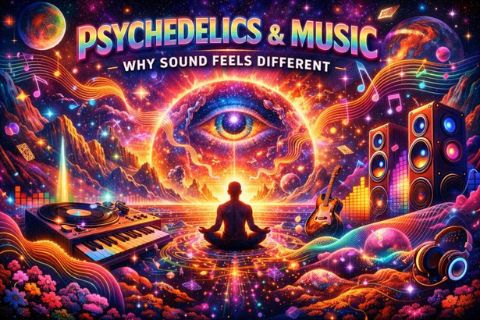
Music and psychedelics have long been intertwined—but why? Many people describe music as feeling deeper, more emotional, or more detailed under altered states. 🎧 This is often attributed to changes in how the brain processes sound, emotion, and memory. Genres like psychedelic rock, ambient, jazz, and electronic music were heavily shaped by artists trying to […]
The modern psychedelic conversation is no longer just cultural—it’s scientific and ethical. Researchers are studying these substances in controlled environments to understand their potential role in mental health treatment, trauma research, and emotional well-being. 🧪📊 At the same time, society is grappling with important questions: Who should have access? How do we balance research with […]
Creativity thrives on new connections, and psychedelics are often discussed for their role in breaking habitual thinking. Artists, writers, and thinkers have long reported moments of inspiration linked to altered perception—not because psychedelics “create” ideas, but because they change how ideas are connected. 🧠⚡ Psychologists describe this as cognitive flexibility—the ability to see problems, symbols, […]
When people talk about psychedelic therapy, they’re not talking about casual use or quick fixes. At its core, psychedelic therapy refers to clinically guided experiences designed to support mental and emotional healing. In research and therapeutic settings, these experiences are carefully structured. Preparation, intention-setting, and integration are often considered just as important as the experience […]
One of the most important concepts in psychedelic therapy is set and setting. “Set” refers to mindset—emotions, expectations, and mental state. “Setting” refers to the environment—physical space, people present, and overall atmosphere. Together, they shape how an experience is perceived and remembered. Therapeutic approaches emphasize calm environments, emotional safety, and trusted guidance. 🕯️ This structure […]
Trauma often lives beneath the surface, shaping thoughts and behaviors long after the original experience has passed. Traditional therapies work gradually—but researchers are exploring whether psychedelic therapy may help people approach trauma from a different perspective. In controlled settings, some individuals report feeling emotionally distanced enough to revisit difficult memories without being overwhelmed. This can […]
You should look no further than this space for a complete evaluation of the studies looking into the potential usefulness of Ketamine in medical therapy. Generally, all signs point to the fact that Ketamine might relieve chronic depression and suicidal thoughts. When its effects kick in, it softens the ground enough for other forms of […]
Microdosing psilocybin involves the consumption of sub-hallucinogenic doses of psilocybin-containing mushrooms, which is reported to have various psychological benefits. This practice has gained popularity as a means to enhance mood, creativity, and focus, as well as to alleviate symptoms of mental health conditions.
Ketamine treatments for depression vary in frequency and duration. Ketamine infusions administered intravenously 1 to 3 times per week are considered the quickest and most effective treatment for depression, suitable for both unipolar and bipolar depressive episodes.
Understanding how long ketamine stays in your system is crucial, as it can impact drug testing and detection times.